
 Creating a "Senior Citizen Friendly" home means making modifications that enhance the safety, comfort, and independence of elderly residents. These upgrades address common challenges such as muscle weakness, mobility issues, limited flexibility, balance concerns, and diminished eyesight.
There are many fairly simple and inexpensive options available to upgrade your home to make it more Senior Citizen Friendly. Some of those changes in the bathroom could include lever-style water faucets, grab bars in bathrooms and around toilets, shower seats, non-slip flooring, bidet-style toilet seats, and step-free entries into showers.
In the kitchen, changes could include lowered countertops for wheelchair access and cabinets with pull-out shelves.
Throughout the house changes include installing lever-style door handles, wider doorways for wheelchairs, and access ramps. Handrails in hallways, and for multi-story homes, a stairlift can be installed.
Note that many of these changes can also benefit disabled persons of any age, children, and pregnant women.
Today approximately 25% of the U.S. population is over 60 years old. Ideally these seniors can age in place safely and comfortably for as long as possible before some of them move to an assisted living facility where the expenses can range from $4500 to $8000+ per month.
The expense of most of these Senior Citizen Friendly upgrades is usually much less than even one month of assisted living.
Peachy Home Solution's goal is to allow seniors to age in place as safely and comfortably for as long as possible. Our safety engineering experts are uniquely qualified to achieve this goal for you.
If you could only make one change in your home to improve the safety of your loved ones, installing a grab bar on the wall of your shower or tub would be my strongest recommendation.
Bathroom Improvements Offer the Biggest Bang for your Bucks
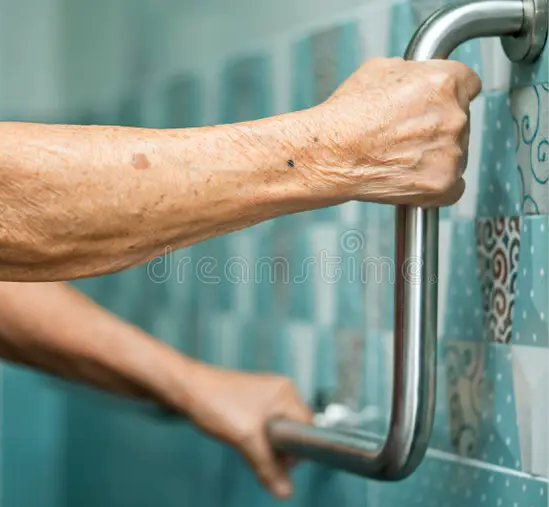 The most critical area in your home for safety is the bathroom, which presents the highest risk for falls of any area in the home. Falls can be life-threatening, especially for senior citizens. A few inexpensive changes here can lower the risk of falling substantially.
Key upgrades to prevent falls include the installation of grab bars in the shower/tub area and near the toilet. Most of the injuries occur while getting in or out of the tub or shower. Installing something solid to hold onto is an effective and inexpensive way to help prevent the most common cause of injuries in the bathroom - falling.
A shower seat and a handheld showerhead further adds convenience and safety. Standing for long periods can be a challenge for seniors.
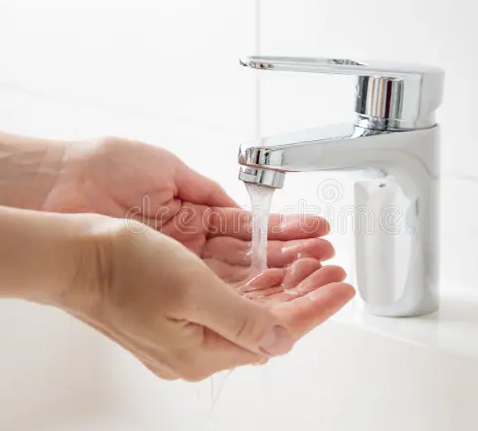 For the bathroom sink, lever-style faucet handles are also easier for those with arthritis to use than traditional knobs. No gripping, no twisting, just a gentle push that can be done with the side of your hand or your knuckles.
Installing extra tall toilets may also be a good option for some who have difficulty getting up and sitting down. Or an electronic bidet toilet seat that washes and even dries might be a great choice for those who have limited use of their hands, or just want the ultimate in cleanliness of their private parts.
While the bathroom is the most dangerous area of the house, there are other changes to other parts of the house that can enhance safety, comfort, and independence for elderly residents.
Improving Access Between Rooms
Widening too narrow doorways, especially to the bathroom, offers significant advantages for elderly and disabled individuals, including increased independence and safety, easier navigation with mobility aids like wheelchairs and walkers, and enhanced support for caregivers. Many modern homes were built with 24" wide doors to the bathrooms but wheelchairs are at least 27" in width.
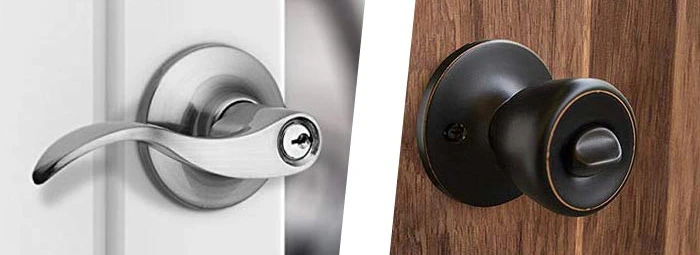 Replacing traditional round doorknobs (right) with lever-style handles (left) requires less grip strength. This could be a critical upgrade in case of an emergency when someone is trying to exit a room quickly.
Mobility is a primary concern for many seniors. Ensuring clear pathways throughout the house is essential. Removing loose rugs and installing non-slip flooring materials helps prevent trips and falls.
Kitchen Upgrades
Kitchen upgrades focus on accessibility and ease of use. Just like the bathroom sinks, installing lever-style faucet handles in the kitchen sink make it so much easier for those with limited hand mobility to use than traditional turning knobs.
Pull-out shelving in cabinets minimizes bending and reaching, making items more accessible. Replacing standard knobs with lever handles on doors and cabinets, and D-shaped pull handles, makes gripping easier for limited hand mobility hands. Under-cabinet task lighting illuminates countertops clearly.
Lighting Upgrades
Good lighting is of paramount importance throughout the house. Installing nightlights, especially motion-activated ones in the hallways, bathrooms, bedrooms, can be very useful. Increasing overall ambient light in the home can compensate for age-related vision decline.
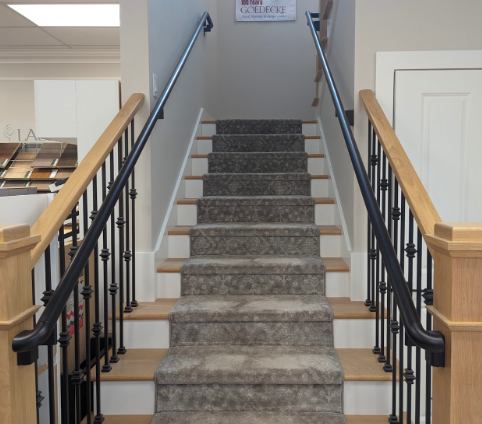
For multi-story homes, a stairlift or even an elevator installation may be necessary, depending on the severity of mobility challenges. For those with minor mobility difficulties, securing handrails on both sides of staircases offers better support.
Other Home Upgrades
Small changes also make a significant difference. Installing remote-controlled light switches, automated blinds, and smart home technology allows seniors to manage their environment with less physical effort. A strategically placed landline phone and an emergency alert system provide a critical layer of safety and peace of mind.
Ultimately, these modifications are a proactive investment in a senior's quality of life. By focusing on safety, accessibility, and comfort through deliberate, senior citizen friendly upgrades, elderly individuals can maintain their independence and continue living happily in their own homes for years to come.