
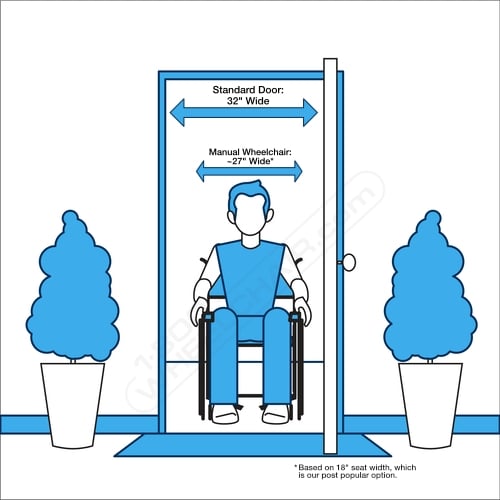
Widening doorways offers significant advantages for elderly and disabled individuals, including increased independence and safety, easier navigation with mobility aids like wheelchairs and walkers, and enhanced support for caregivers.
These modifications also support a greater sense of autonomy, contribute to better mental well-being, and can even improve emergency evacuations and future home value. Many modern homes were built with 24" wide doors to the bathrooms but wheelchairs are at least 27" in width.
Benefits for individuals
-
Enhanced independence: Widening doorways is a key modification that allows individuals to navigate their home independently, which is essential for those using mobility aids.
-
Accommodation of mobility aids: Standard doorways are often too narrow for wheelchairs, walkers, and scooters. Widened doorways, especially those with a clear width of 32 to 36 inches, allow for much easier and less problematic passage.
-
Improved safety: Wider openings reduce the risk of bumping into door frames, which can prevent accidents and potential injuries.
-
Increased accessibility for personal tasks: It makes daily activities like getting dressed, accessing the bathroom, and getting food or other items from room to room more manageable and less frustrating.
-
Support for caregivers: Wider doorways are also beneficial for caregivers, providing them with more space to safely assist individuals as they move through the home.
Wider benefits and long-term value
-
Improved emergency response: Wider doorways can be critical during emergencies, allowing for faster and more efficient movement of people and equipment, such as emergency personnel or wheelchairs during an evacuation.
-
Positive mental well-being: Greater independence and a sense of autonomy can lead to improved self-confidence and overall mental health.
-
Future-proofing the home: This modification is a valuable investment that can make a home more appealing to a wider range of buyers in the future, especially those with an eye toward long-term accessibility needs.
-
Reduced care needs: By making a home safer and more accessible, these modifications can reduce the need for professional or informal care, leading to potential cost savings.