
There are several types of ramps available depending upon your needs. We will use a company that specializes in just installing ramps.
- Modular Ramps: These are a popular and versatile option made from pre-fabricated sections, typically aluminum, that can be configured to fit almost any entryway or layout.
- Reviewers praise them for their quick, easy installation (often in hours) without major construction and their ability to be disassembled, moved, or resold.
- They are durable, weather-resistant, and low-maintenance, offering excellent traction in all seasons.
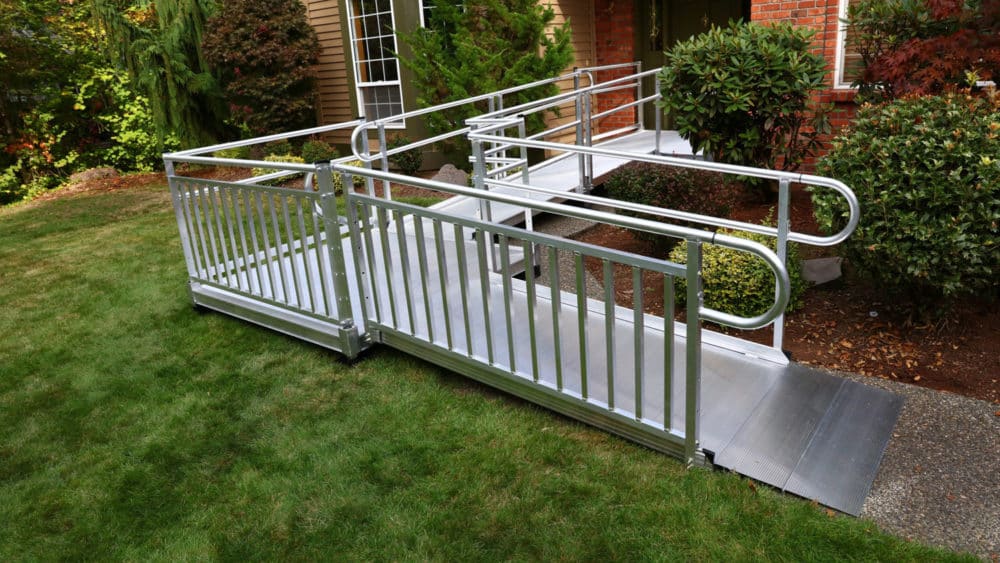 We really like these since they are more long lasting than the wood ramps.
-
- Permanent Ramps: These ramps are custom-built to integrate with a home's architecture and are a long-term solution.
- They are often constructed from wood or concrete and require more effort, time, and potentially building permits to install.
- Concrete ramps are the most durable and require minimal maintenance once built, while wood ramps offer an aesthetic appeal but need regular upkeep to prevent rot and slipperiness.
- Portable Ramps: Designed for flexibility and travel, these are lightweight solutions for temporary or occasional use.
- They are typically made of aluminum and often fold or telescope into a compact form for easy transport and storage in a vehicle.
- Types include single-fold, multi-fold (tri-fold), rollable, and telescoping ramps.
- Permanent Ramps: These ramps are custom-built to integrate with a home's architecture and are a long-term solution.
- Threshold Ramps: These are small, standalone ramps designed to bridge minor height differences, such as uneven flooring, raised door frames, or small steps.
- They are available in materials like rubber, aluminum, or plastic polymer and help eliminate trip hazards and provide a smooth transition for mobility devices.