
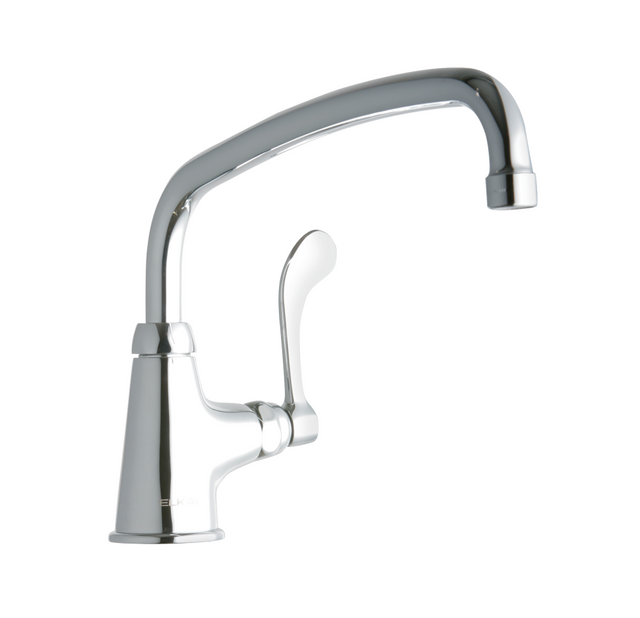
 Replacing dual faucets with a single-lever faucet is recommended for elderly people because it improves ease of use, safety, and accessibility.
Single-handle faucets are easier to operate for those with limited grip strength or dexterity, such as individuals with arthritis, because they only require lifting or pressing a lever instead of twisting two separate knobs.
This reduces strain and the risk of injury, especially chronic conditions such as carpal tunnel syndrome.
Ease of use
- One-handed operation: A single lever allows the user to control both water flow and temperature with just one hand, which is especially helpful when the other hand is busy.
- Easier to grip: A long lever is easier to grasp and manipulate than two small knobs, and can be operated with a wrist or elbow if hand grip is limited.
- Faster temperature control: It is quicker to find the right temperature by adjusting a single lever than by trying to balance two separate knobs.
Safety
- Reduced risk of burns: It can be easier to accidentally turn on only the hot water with a double-handle faucet. A single lever, with its combined controls, can make it harder to accidentally scald oneself.
- Lower risk of slips and falls: Gripping and turning a small, slippery knob can be difficult. Lifting a lever is often a more secure and stable motion.
- Easier for those with tremors: The larger, more stable lever provides better control for individuals with tremors or limited range of motion, such as those with Parkinson's disease.
Accessibility
- Improved independence: Single-handle faucets support independence by making a common household task easier to perform autonomously.
- Accommodates limited mobility: